Jonathan Reynolds, the UK Secretary of State for Business and Trade, stated that the UK will not be pressured by the European Union into imposing import tariffs on Chinese electric vehicles (EVs). He emphasized that any decisions the UK makes regarding trade defense measures are based on its own national interest—”not because another country has asked us to.”
Starting in 2024, the EU has imposed import tariffs on Chinese EVs, with rates reaching as high as over 45%. More recently, the EU introduced “import quota” measures, with plans to set an initial quota of 350,000 units for Chinese hybrid electric vehicles, effective from 2027. The price advantage of Chinese EVs has placed pressure on the EU’s automotive industry, fueling concerns regarding supply chain dependency and “deindustrialization.”
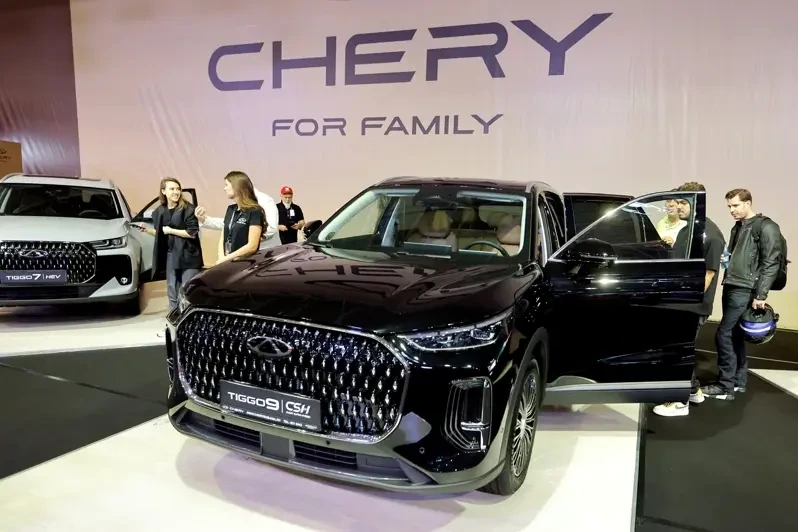
To date, the UK has not adopted similarly stringent countermeasures against Chinese EVs. Meanwhile, Japan’s Nissan is in talks with China’s Chery to potentially manufacture Chery-branded vehicles at Nissan’s plant in Sunderland, Northeast England—a partnership that could begin as early as next year.
Should an agreement be reached, it would mark the first instance of Chinese vehicles being mass-produced on British soil. For the UK government—which is focused on expanding the domestic labor market and boosting employment—this could be framed as a positive development.
Jonathan Reynolds, currently leading a delegation on a visit to India, told The Guardian that while the possibility of imposing restrictions on Chinese imports in the future cannot be ruled out, he does not believe that the UK’s current stance effectively turns the country into a “back door” for Chinese goods to enter the EU market.
Some critics have argued that the UK’s trade policy toward China is too lenient, potentially creating a “breach” in the EU’s defensive trade stance against China.
Reynolds noted that the UK government carefully assessed these issues in 2024 and will continue to review them on an ongoing basis, in line with the needs of the industry. Ultimately, however, the discussion must return to the fundamental nature of the UK automotive sector—namely, that it is “export-oriented”—a factor he, as Secretary of State for Business and Trade, must take into account. This means the UK must consider the possibility of Chinese countermeasures, which could harm British automotive exports to China—specifically luxury brands such as Jaguar Land Rover, Rolls-Royce, Bentley, and Aston Martin. These brands have seen a notable decline in their Chinese market share in recent years, partly due to increasing competition from domestic Chinese manufacturers.
Conversely, Chinese automotive brands have seen rapid growth in the UK, with their market share now approaching 20%.
Recent media reports suggest that the UK government is considering imposing import tariffs on Chinese electric vehicles (EVs) to align its policy with the European Union—a move that could also help lay the groundwork for the upcoming UK-EU summit in November.
However, an analysis of statements made by Jonathan Reynolds since he took office in July suggests that the UK may not necessarily follow the EU’s lead on Chinese EVs, as it seeks to “balance” competing interests and “comprehensively assess” the various risks involved.
During a visit to the facilities of the high-end British sports car manufacturer McLaren in mid-September, Reynolds remarked that the UK should avoid imposing tariffs on Chinese EVs—a step that could invite retaliation from Beijing and jeopardize British automotive exports. “We want to sell cars to China,” he stated.
According to a report by The Daily Telegraph at the time, Reynolds further suggested that rather than erecting barriers for Chinese automakers, the UK should look to leverage China’s advanced engineering expertise. He indicated that the government might even encourage Chinese EV firms to use the UK as a springboard for entering the broader European market.
Reynolds noted that China is significant not only for its cost-competitive production models but also for the presence of Chinese companies that rank among the world’s most innovative.
The report quoted Reynolds as saying that the UK should “look globally,” “identify where innovation is happening,” and “bring that innovation back to the UK.”
Regarding concerns that Chinese EVs could pose information security risks, Reynolds stated that the UK government would continue to monitor potential security threats and evaluate each case on an individual basis. While security concerns are indeed a significant consideration, the adoption of cutting-edge technology is equally important.
Jonathan Reynolds’ latest remarks today regarding Chinese electric vehicles (EVs) may introduce an element of uncertainty ahead of the UK-EU summit scheduled for November in Brussels.
Unlike his Labour Party predecessor, former Prime Minister Keir Starmer (who served from 2024 to July 2026), the current Prime Minister, Andy Burnham, has shown greater enthusiasm for integration with the European Union—recently stating that he would not rule out the UK “rejoining” the EU.
Furthermore, the UK is seeking to participate in the EU’s “Made in Europe” initiative—a framework designed to revitalize European industry and enhance supply chain autonomy—while simultaneously striving to exert influence over the initiative before it is fully implemented, in order to ensure that the resulting regulations do not harm the interests of British businesses. The UK formally withdrew from the EU in January 2020.
Against this backdrop—compounded by the EU’s intense focus on trade imbalances with China—significant divergences in trade policy remain between the UK and the EU, which could complicate any potential “return” to the bloc. The trade imbalance with China is, in fact, one of the factors that prompted the EU to launch the “Made in Europe” initiative.
Addressing reports that the UK is being urged to impose tariffs on Chinese EVs—or risk stalling progress in trade negotiations with the EU—Reynolds told The Guardian that excluding the UK from “Made in Europe” would be the EU’s own loss, given the deep integration of supply chains between the UK and the EU.
Reynolds further noted that should the UK rejoin the EU, the free trade agreement signed with India last year—along with other major bilateral deals—would effectively become void. The UK would be required to adhere to the EU’s principle of “collective action” in its external affairs.
Reynolds remarked that this, quite clearly, explains why the UK did not—back when it was still an EU member—have the kind of “tailor-made” agreements with various economies that it maintains today.
发送反馈